
RFID laundry tags
LaundryChips™: built to survive real industrial laundry conditions.
RFID laundry tags are durable, washable transponders embedded in garments, linen and reusable textiles to enable automatic identification and tracking throughout the laundry process. They support automated counting, inventory visibility, wash-count tracking, loss reduction and customer reporting, without manual scanning and without line-of-sight.
Not every RFID tag can survive industrial laundry. Standard RFID labels are not designed for repeated exposure to high-temperature washing, chemical detergents, water extraction, tumble drying, ironing and mechanical pressing. This is why Datamars developed LaundryChips™: specialized RFID laundry tags engineered for long-term durability, reliable reading performance and continuous operation in real industrial laundry conditions.
Datamars invented the first RFID laundry tag in 1990. Today, over 500 million LaundryChips™ are in use worldwide, across more than 10,000 installations in 65 countries, supporting garments, flat linen, workwear, hospitality textiles, healthcare textiles and textile rental operations.
TAG FORMATS
Main LaundryChip™ formats and application methods
Choosing the right LaundryChip™ format depends on the textile item, available application space, wash conditions, reading requirements and when the tag is applied in the textile lifecycle. Datamars offers different RFID laundry tag formats and attachment methods to support both new textile production and retrofitting of existing textile inventories, from invisible source tagging to heat-sealed, pouched, mat-integrated and trolley-tracking solutions. See the video on how to attach RFID laundry tags to linen.
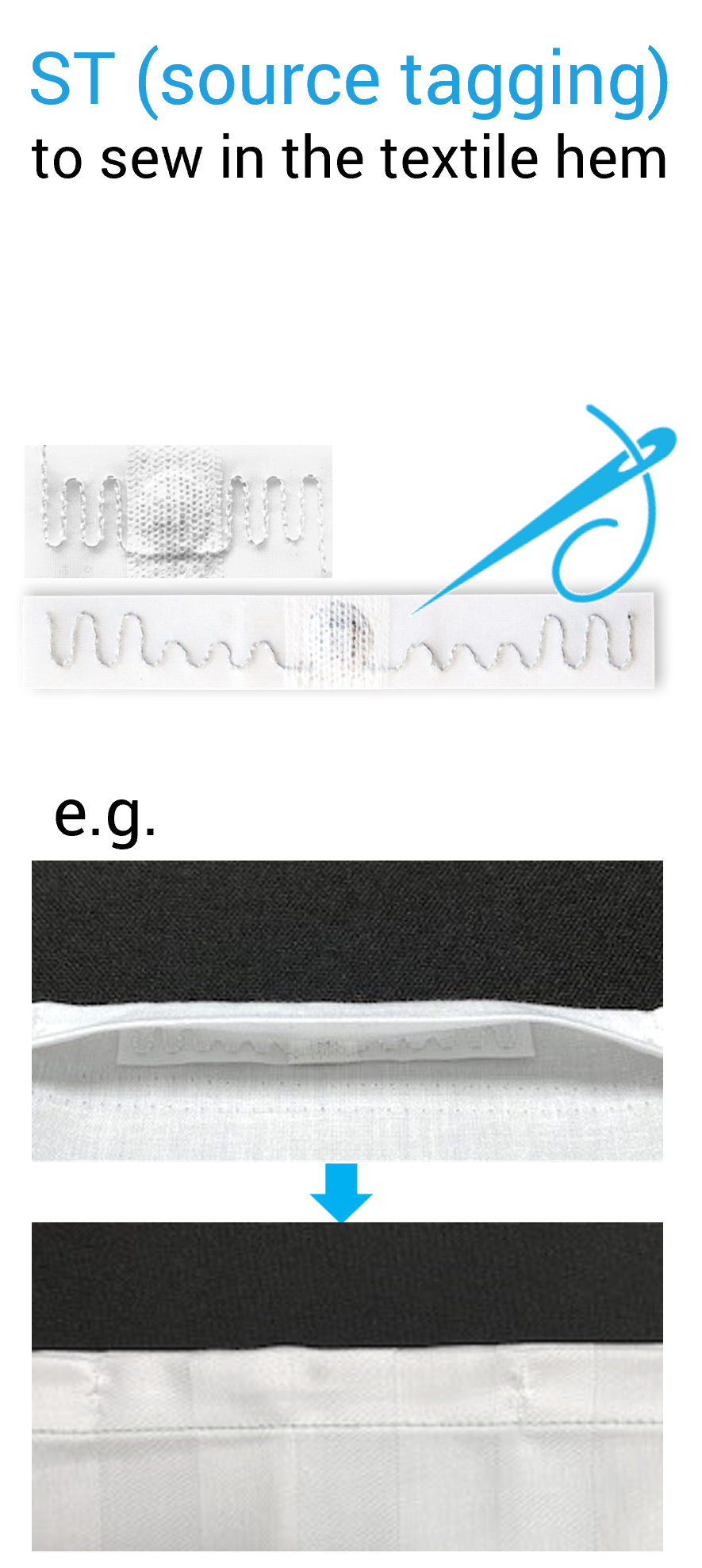
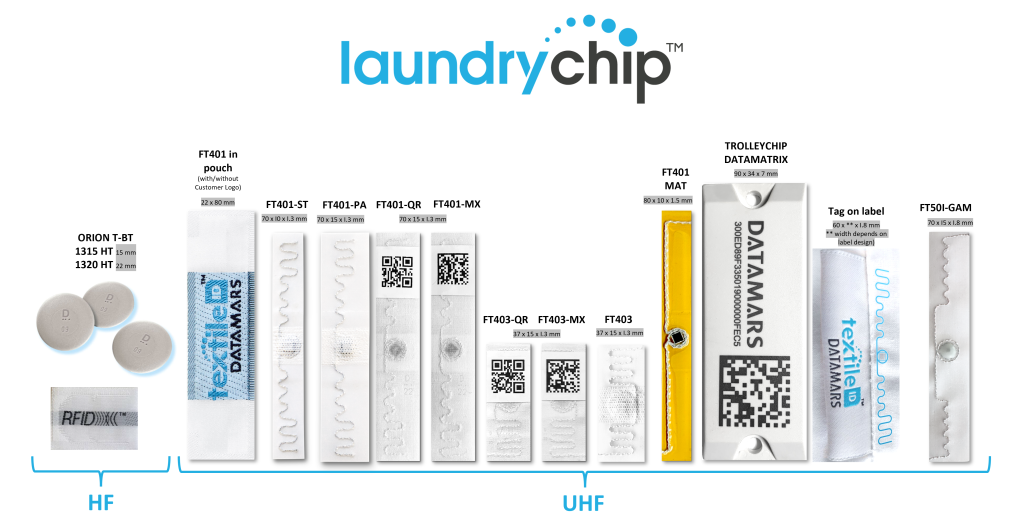
Source tagging: sewn directly into the textile hem during manufacturing. Completely invisible once embedded (E.g. FT401ST, FT403).
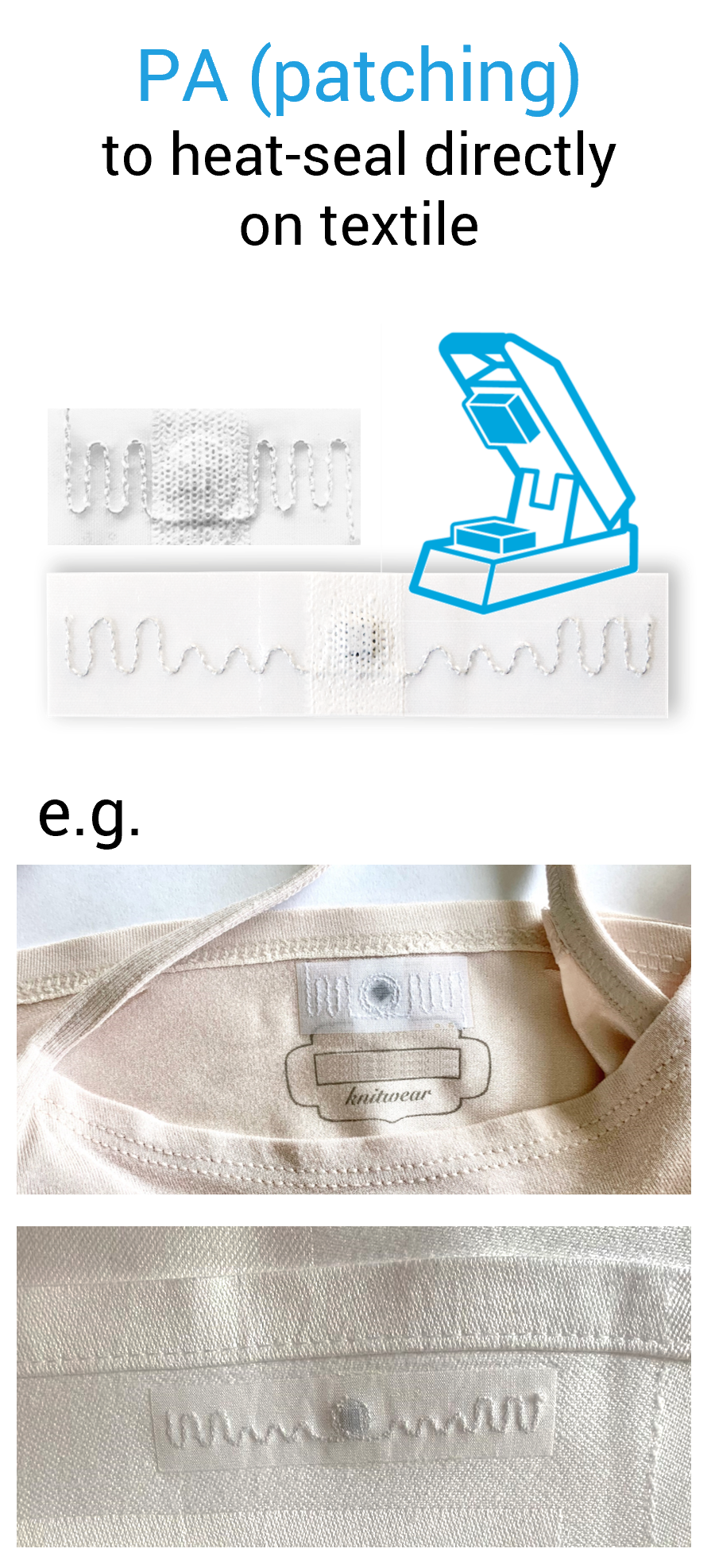
Patchable: heat-sealed directly onto the fabric without sewing (E.g.: FT401PA, FT403). Also available with integrated QR code (FT401-QR; FT403-QR) or Datamatrix code (FT401-MX; FT403-MX) for smartphone reading.
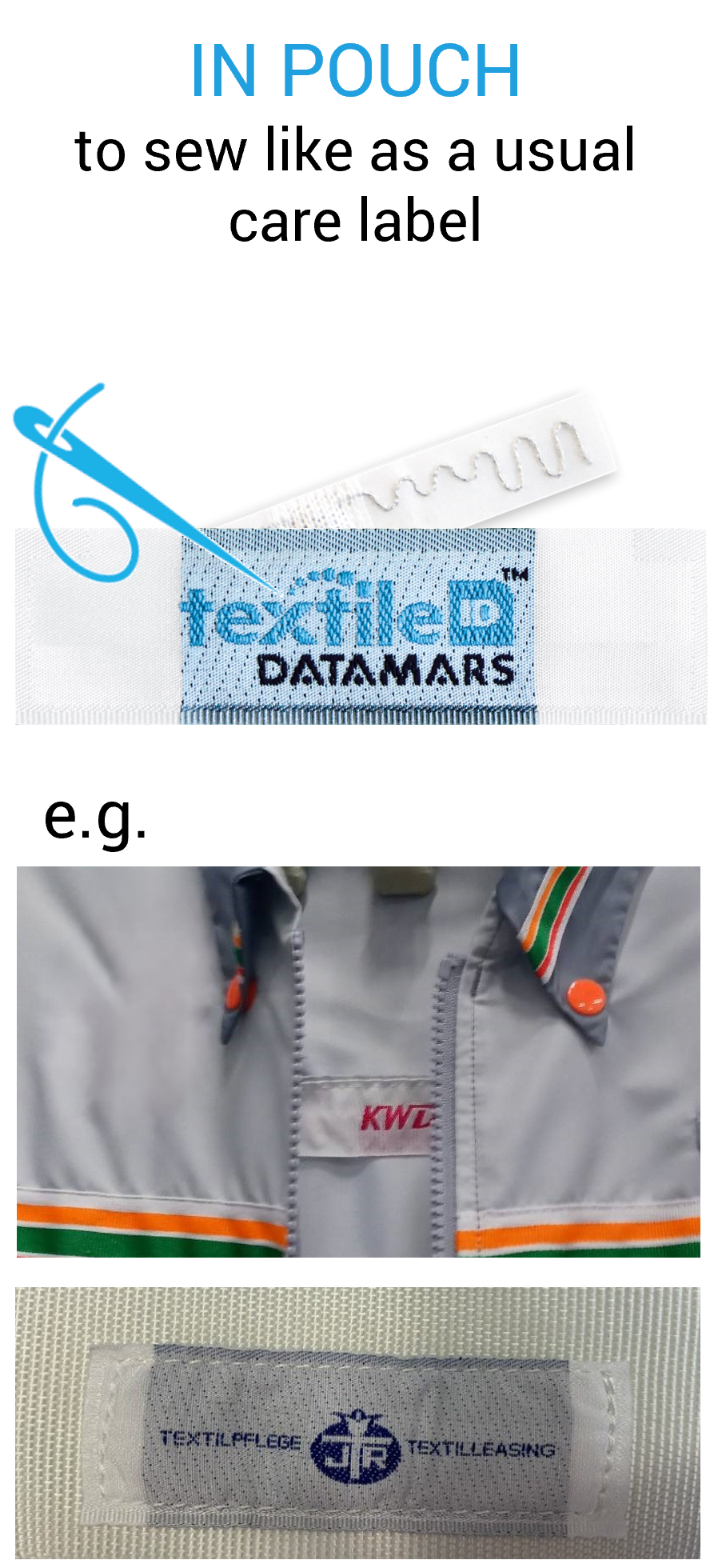
In pouch: pre-inserted into a sewable pouch with generic or personalised logo. Ideal for retrofitting existing textile inventory. (E.g.: FT401 in pouch)
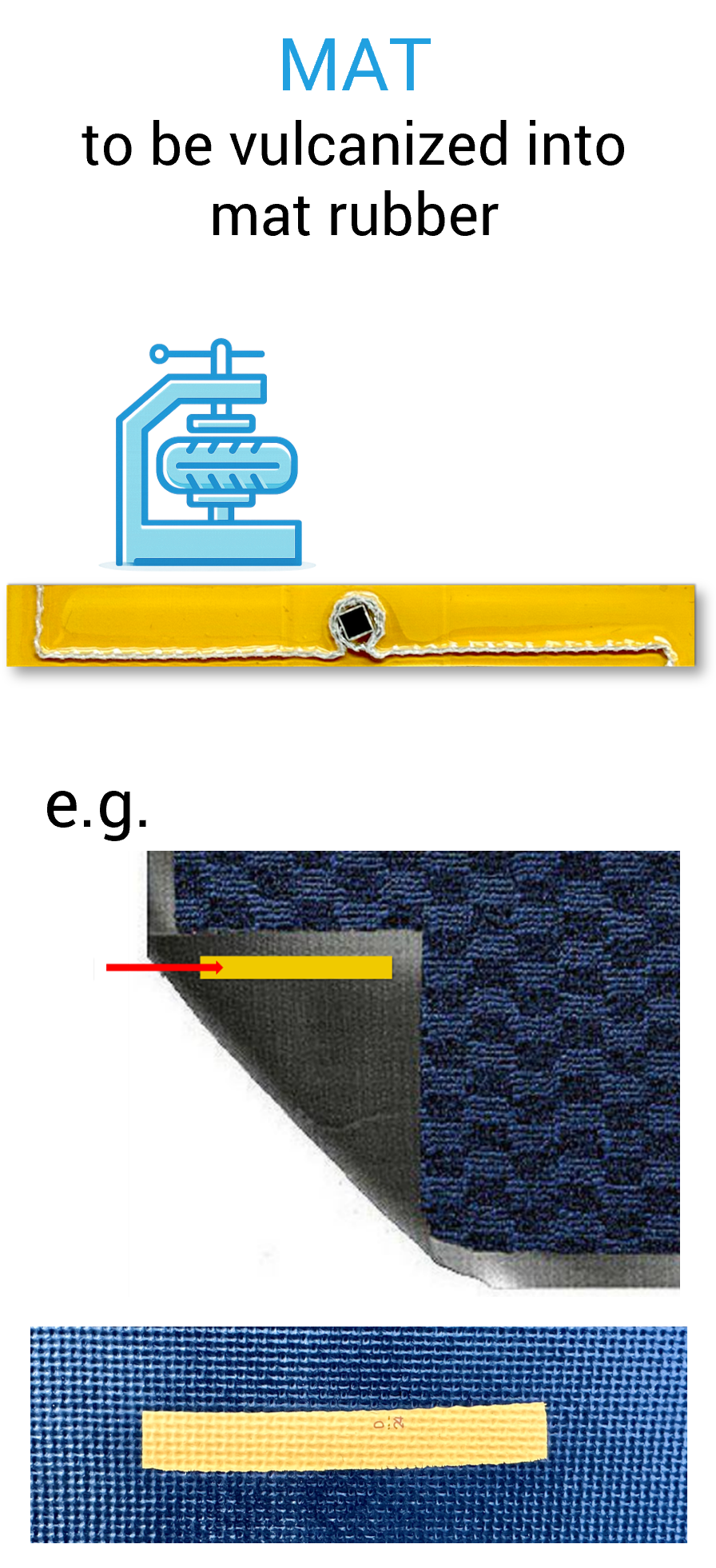
Vulcanized into rubber (floor mats, entrance mats, mops): vinyl-based UHF transponder that vulcanises seamlessly with the mat during production. No visible tag, no interference with the mat’s function. (eg F401 MAT)
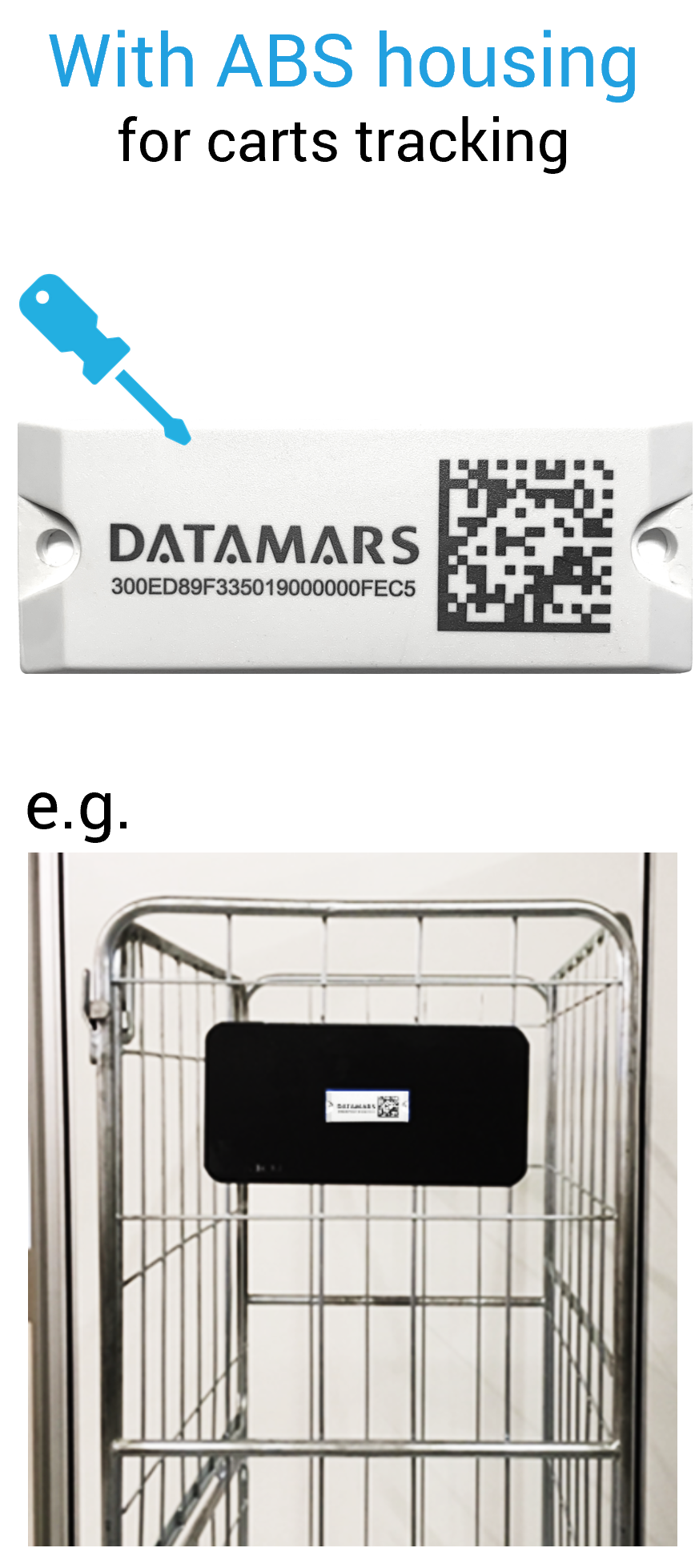
Laundry Cart Tracking (TrolleyChip): rugged on-metal UHF transponder in durable white ABS housing, with laser-engraved Datamatrix code.
USE CASES
LaundryChip™ applications
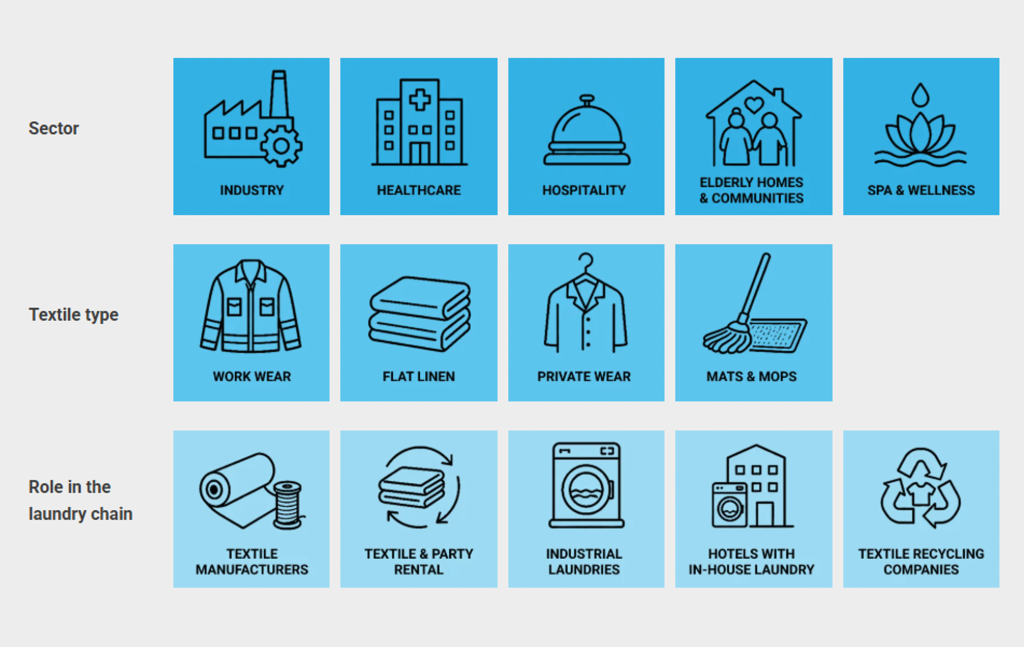
The LaundryChip™ supports textile identification across laundry and textile service environments: hotel linen, healthcare garments and linen, private wear, mats and mops, workwear and uniforms, restaurant table linen and napkins, gym towels, spa and wellness robes, sports team apparel, textile rental items.
The same principle applies across all: each item receives a unique identity, read automatically and connected to operational data.
For a complete overview, see all our RFID solutions specialized for any laundry sector and textile.
TECHNICAL PERFORMANCE
Key specifications
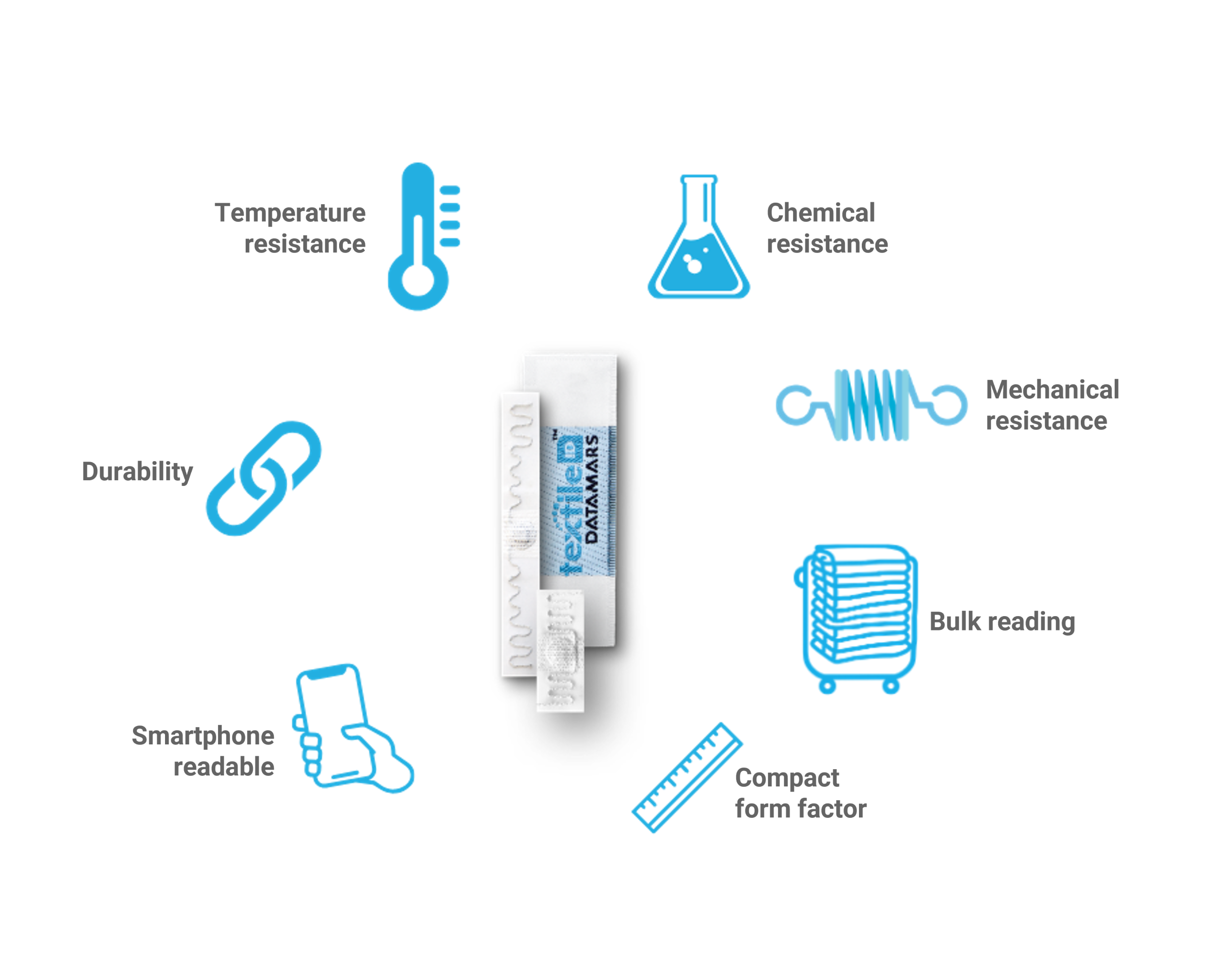
- Durability: engineered to last the full textile lifetime. Minimum 200 industrial wash cycles guaranteed for workwear.
- Temperature resistance: withstands industrial washing temperatures, tumble drying and high-pressure ironing. High temperature variants handle the most extreme thermal conditions.
- Chemical resistance: survives continuous exposure to industrial detergents, bleach and chemical sterilisation agents.
- Mechanical resistance: built to endure water extraction presses, roller ironers and folding machines.
- Bulk reading: UHF technology reads up to 1,000 items in 3 seconds, without line-of-sight, without separating items.
- Compact form factor: FT401 at 70 x 10 mm and FT403 at 37 x 15 mm. Among the smallest laundry RFID tags on the market. Invisible once embedded.
- Smartphone reading: Standard UHF RFID tags require dedicated readers to be identified. Datamars offers specific LaundryChip™ variants with an additional printed QR code (FT401-QR) or Datamatrix code (FT401-MX), allowing item-level identification with any standard smartphone camera where a dedicated RFID reader is not available.
Full technical specifications of our most widely used RFID laundry tags: UHF LaundryChips™ 401 & 403. Complete transponder portfolio: products to identify and track every kind of textile.
COMPLIANCE & CERTIFICATIONS
LaundryChip™ certifications
RFID laundry tags used in industrial laundry must be safe, durable and reliable in demanding textile service environments. LaundryChips™ are designed and manufactured to meet strict quality and safety requirements, including skin-contact safety, healthcare compatibility and controlled in-house production. These certifications help laundries, textile rental companies, hospitals, hotels and workwear providers select RFID tags that are not only technically reliable, but also suitable for the textiles, users and environments they serve.
OEKO-TEX Standard 100
The entire LaundryChip™ 40x and 50x families are certified free of harmful substances and safe for direct skin contact. Relevant for workwear, private wear, healthcare garments and any textile worn against the skin.
MR Conditional
The LaundryChip™ FT401 is certified suitable for use in magnetic resonance equipment (1.5t and 3t). The only RFID laundry tag on the market with this certification. A critical differentiator for hospitals and imaging centres.

ISO 9001
All LaundryChips™ are developed and manufactured in-house under rigorous quality management. Datamars is one of the few fully integrated RFID laundry tag manufacturers with complete control over design, production and quality.
SELECTION GUIDE
How to choose the right RFID laundry tag
Choosing the right RFID laundry tag depends on the textile, the laundry process and the operational goal. The best tag is not simply the smallest or strongest option: it is the one that fits the textile correctly, survives the expected wash and finishing conditions, supports the required reading performance and integrates with the existing infrastructure. Datamars helps customers evaluate textile type, attachment method, available space, wash conditions, reading mode and software integration before selecting the most suitable LaundryChip™ configuration.

Textile type
Flat linen, garments, napkins, mats, workwear, private wear: each has different space constraints and handling conditions.

Attachment method
Source tagging, patchable or in pouch. Depends on when and where tagging happens in your process.

Available space
Hem width and surface area determine which format fits. FT403 for the smallest items.

Reading mode
Bulk reading (UHF, up to 1,000 items simultaneously) or single-item reading (LF/HF). Most modern operations choose UHF for speed and scale.

Wash conditions
Temperature profile, chemical agents, mechanical stress level.

Existing infrastructure
Already running LF or HF readers? Compatible tags and combo systems are available for phased transition.
Datamars Textile ID supports customers with tag selection, application method guidance, sample evaluation, project setup, integration with readers and software, and guidance for existing or new textile inventories.
QUESTIONS & ANSWERS
Frequently asked questions
LaundryChips™ are engineered to last for the full lifetime of the textile in demanding industrial laundry conditions. For workwear applications, Datamars guarantees a minimum durability of 200 industrial wash cycles, depending on the specific tag variant, textile type, application method and wash process. LaundryChips™ are designed to withstand repeated washing, chemical detergents, water extraction, tumble drying, ironing and mechanical finishing. Their durability is one of the key reasons they are used in professional laundry and textile rental operations, where a tag must remain attached, readable and reliable for as long as the textile remains in service.
RFID laundry tags can be read in bulk when they use UHF RFID technology, which is the standard for high-throughput textile services. UHF LaundryChips™ allow laundries to read up to 1,000 items in 3 seconds, without separating textiles, manually handling each piece or requiring line-of-sight. This makes bulk reading especially useful for bags, trolleys, stacks, carts and large textile batches moving through check-in, sorting, dispatch or return points. Bulk RFID reading helps reduce manual counting, speed up operations, improve inventory accuracy and support automated workflows in industrial laundry environments. For the full technology comparison, see UHF RFID for textile services.
RFID laundry tags used in garments, workwear, private wear and healthcare textiles must be safe for direct skin contact. The whole LaundryChip™ 40x and 50x families are OEKO-TEX Standard 100 certified, which means they have been tested and confirmed free from harmful substances according to strict textile safety criteria. This certification is especially relevant for textiles worn directly by people, such as uniforms, personal garments, patient clothing and other items that may remain in contact with the body for long periods. LaundryChips™ are therefore suitable for professional textile applications where both tracking performance and wearer safety are required.
The difference between the FT401 and FT403 is mainly their size and the textile applications they are designed for. Both are UHF LaundryChips™ with the same patented double loop antenna concept and strong reading performance. The FT401, measuring 70 x 10 mm, is the standard format for flat linen, garments, workwear and most general laundry applications. The FT403, measuring 37 x 15 mm, is designed for smaller textile items such as napkins, small towels or textiles with limited hem space. Both formats are compact, durable and invisible once correctly embedded in the textile.
Silicone RFID laundry tags are not part of the standard Datamars LaundryChip™ range, because LaundryChips™ use a proprietary encapsulation material specifically engineered for industrial laundry performance. The material is designed to withstand repeated washing, chemical exposure, extraction, drying, ironing and mechanical stress while maintaining long-term readability. However, Datamars can discuss custom formats, materials or adaptations when a standard LaundryChip™ does not fully match a specific textile, process or application requirement. For projects requiring a special tag design, material construction or attachment method, the best next step is to contact us and review the technical requirements with a product specialist.
LaundryChips™ can support anti-counterfeiting because each LaundryChip™ carries a unique identifier that is permanently linked to the textile item. This unique identity can be used not only for operational tracking, but also for authenticity verification throughout the textile lifecycle. By connecting the tag ID to a secure software database, textile owners, laundries or brands can verify whether an item is genuine, trace where it has been used and confirm its lifecycle history. This can be useful for high-value textiles, branded garments, rental assets, controlled workwear and applications where item authenticity, ownership and traceability are important.
Bulk RFID laundry tags are available for hotel management programs where large volumes of linen, towels, robes, table linen and uniforms need to be identified and tracked. Datamars supplies LaundryChips™ for hospitality operations with options for custom encoding, branding and volume-based supply. In hotel environments, RFID laundry tags help improve inventory accuracy, reduce linen losses, verify deliveries and returns, and create clearer reporting between hotels and laundry service providers. Bulk tagging is especially valuable for hotel groups, resorts and outsourced laundry programs where textile volumes are high and manual counting is slow or unreliable. See hotel linen tracking.
The cost of an RFID laundry tag depends on the selected tag variant, format, order volume, encoding requirements, branding needs and any custom development requested. A standard price is difficult to define without knowing the textile type, application method, wash conditions, reading requirements and project scale. In industrial laundry, the relevant question is not only the unit price of the tag, but the value it creates over the textile lifetime through reduced losses, automated counting, accurate wash-count records and better inventory control. For an accurate price, Datamars can provide a quote based on the specific application and volume. Contact us!
Datamars can produce custom RFID laundry tags because LaundryChips™ are designed and manufactured entirely in-house, giving Datamars full control over engineering, materials, antenna design, production and quality. Custom developments can include specific formats, sizes, antenna designs, branding, application methods or constructions for unusual textiles, wash conditions or operational requirements. This flexibility is useful when a standard LaundryChip™ format does not fully meet the needs of a customer project. Datamars can support the process from technical assessment and prototype design through testing, manufacturing and deployment, which is a level of end-to-end control that few RFID laundry tag suppliers can offer.
The best RFID laundry tag for flat linen operations is usually selected based on textile size, hem space, reading performance and the level of automation required. For high-volume flat linen such as sheets, towels, tablecloths and similar items, the FT401 and FT403 are the main LaundryChip™ formats. The FT401 is typically used where standard hem space is available, while the FT403 is suited to smaller items or tighter spaces. Combined with pass-through RFID reading systems, these tags support fast bulk reading, accurate inventory control and high-throughput laundry workflows. See RFID flat linen tracking.
The best RFID laundry tag for workwear and uniforms depends on the garment construction, application method and expected wash conditions. For new garments, the FT401-ST is often suitable for source tagging, because it can be sewn directly into the textile during manufacturing. For existing garment inventories, the FT401 in pouch can be a practical option because it can be sewn onto workwear during retrofitting. LaundryChips™ used in workwear applications are engineered for industrial wash durability, with a minimum guaranteed durability of 200 wash cycles. RFID workwear tracking supports garment assignment, availability, sorting, repair, replacement and wearer-level control. See workwear and uniform tracking.
The RFID laundry tag suitable for MRI environments is the LaundryChip™ FT401, which is MR Conditional certified. This certification is particularly important for hospitals, healthcare laundries and imaging centres where textiles may enter areas with magnetic resonance equipment. In healthcare environments, RFID tags must not only survive industrial washing and support reliable tracking, but also meet specific safety requirements linked to medical workflows. The FT401 allows hospitals and healthcare textile providers to track linen and garments while addressing MRI-related compatibility needs. This makes it a critical option for healthcare textile management and hospital laundry applications. See healthcare linen and garment tracking.
RFID laundry tags can be used in textile rental operations to give each rented textile item a unique identity linked to a customer, contract, location or lifecycle record. This helps rental companies track which items are in circulation, which customer they belong to, how often they have been washed, which items have been delivered or returned and which are missing. LaundryChips™ support billing accuracy, loss tracking, inventory planning and lifecycle management across multi-client and multi-site rental workflows. For textile rental companies, item-level RFID data helps replace estimated counts with reliable operational information. See RFID textile rental tracking.
RFID laundry tracking works in practice by combining three elements: RFID laundry tags, RFID readers and software. The LaundryChip™ gives each textile item a unique digital identity. RFID readers capture that identity automatically as the item moves through key process points such as check-in, washing, finishing, dispatch, delivery and return. The software then connects each read event to operational data, such as customer allocation, location, wash count, inventory status or missing-item reports. The tag is therefore the first component of the system, but full tracking requires the complete infrastructure of tags, readers and software. See RFID laundry tracking.
An RFID system can be managed across multiple sites when the architecture includes connected readers, device monitoring and software integration across the installation. In multi-site laundry groups, textile rental networks or distributed customer operations, centralized RFID management helps maintain visibility over devices, read points, textile flows and system performance. Datamars supports this through RFID infrastructure and software layers that help collect read data, monitor devices and integrate information with third-party tracking or laundry management systems. Multi-site management is especially important when operations need consistent data across several laundries, depots, customer locations or service areas. For system architecture and remote monitoring, see RFID laundry management system.
An RFID laundry tag does not store operational information about the textile item itself. A LaundryChip™ carries a unique identifier code, which acts as the permanent digital identity of the textile. The associated information — such as textile type, customer, location history, wash count, lifecycle status or billing data — is stored in the connected software database. When the tag is read, the system uses its unique ID to retrieve and update that information. This means the tag is not a storage device for detailed textile data; it is a durable identity code permanently attached to the textile.
The radio waves emitted by RFID readers used in laundry tracking are non-ionizing radio waves and operate at very low power levels. UHF RFID systems used in industrial laundry typically operate in the 860–960 MHz frequency range, the same general category of electromagnetic radiation used by technologies such as Wi-Fi, Bluetooth and mobile communication. Non-ionizing radiation does not carry enough energy to damage biological tissue or DNA. RFID systems used in professional environments are designed to comply with applicable safety standards and regional regulations, including FCC requirements in the USA, CE requirements in Europe and ICNIRP exposure guidelines. Normal RFID operation remains well below established exposure limits.
RFID laundry tags are more expensive than standard RFID labels used for logistics, retail or general identification, but they are not the same type of product. A standard RFID label is not engineered to survive hundreds of industrial wash cycles, high-temperature washing, chemical detergents, water extraction, tumble drying, ironing and mechanical pressing. A LaundryChip™ is designed specifically for these conditions. In industrial laundry, a low-cost tag that fails early can create replacement costs, process disruption and data gaps that exceed the initial saving. The cost of LaundryChips™ reflects their durability, long service life, consistent read performance and reliability across the full textile lifetime.
GET STARTED
Need help choosing the right tag?
Contact us and tell us about your textile types, wash conditions and operational requirements. We will recommend the right LaundryChip™ configuration for your application.
 Datamars | Textile ID