

UHF RFID for textile services
The RFID technology built for bulk reading, long range and industrial laundry speed.
UHF RFID for textile services is the standard technology for high-volume textile tracking in industrial laundry environments. It allows laundries and textile service providers to read large quantities of garments, linen and reusable textiles automatically, in bulk, at long range and without line-of-sight.
In industrial laundry, items move in carts, bags, stacks, trolleys, conveyors, tunnel systems and finishing lines. They are not handled one by one at counting points. This is why the RFID frequency matters: the system must read hundreds of textile items at production speed, without stopping the process or separating items manually.
UHF RFID textile technology operates in the 860–960 MHz frequency range and combines the three capabilities industrial laundries need most: bulk reading capability, long read range and high-speed data capture. This is what makes UHF the right technology for modern laundry tracking, textile rental, hospitality linen management, healthcare textile tracking, flat linen processing and workwear programs.
Datamars LaundryChips™ and reading systems are based on UHF RFID and are engineered specifically for textile laundry conditions. This page explains how UHF compares to LF and HF, which UHF LaundryChip™ formats are available, and how UHF RFID works in real textile service operations.
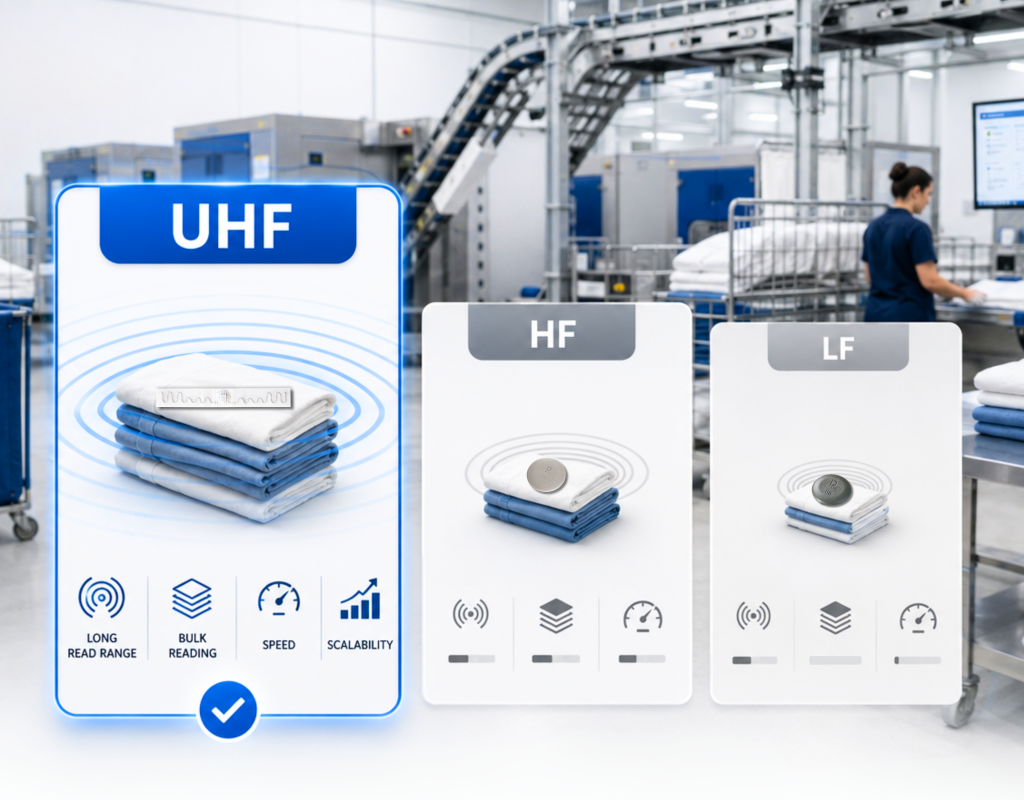
Why UHF matters
Why UHF RFID for laundry: the technical case
Industrial laundry operations process thousands of textile items per shift. Items move through the facility in bulk: in carts, bags, stacks, conveyors, tunnel washers, calender lines and sorting systems. At this scale, the reading system must capture item identity automatically, without stopping the line and without requiring textiles to be separated or presented one by one to a reader.
This is why UHF RFID for laundry is the correct technology choice.
- Read range. UHF RFID operates at 860–960 MHz and can achieve read ranges from approximately 1 to 10 metres, depending on reader configuration and operating environment. LF RFID generally reads at only a few centimetres, while HF RFID typically reads at shorter range. UHF provides the range needed to read carts, bags, stacks and conveyor loads from portals, tunnels and cabinet systems.
- Bulk reading speed. UHF RFID can read many tags simultaneously and at high speed. A UHF cabinet system can read up to 1,000 items in 3 seconds. LF generally reads one item at a time, while HF is better suited to smaller groups at close range. UHF is the frequency that makes bulk textile counting viable at industrial throughput.
- No line-of-sight. UHF RFID can read textile items through fabric layers, folded linen and packed carts, without requiring items to be unfolded or individually handled. This is essential in laundry operations where textiles are processed in batches.
- Scalability. UHF RFID infrastructure scales from a single laundry site to multi-site laundry networks with centralized data, without proportional increases in counting time or manual labor.
The result is clear: bulk reading in industrial laundry is only operationally viable with UHF RFID. LF and HF may still support specific legacy applications, but UHF is the standard for modern high-throughput textile service operations.
RFID frequency comparison
UHF vs HF vs LF: technology comparison for textile services
In a practical UHF vs HF vs LF RFID laundry comparison, UHF delivers the best combination of read range, bulk reading speed and process scalability for industrial laundry environments. HF and LF remain in use in older installations and specific legacy workflows, but they are not the preferred choice for new high-volume textile service deployments.
Datamars provides combo systems UHF-HF-LF for laundries that need to operate existing LF or HF infrastructure while progressively transitioning to UHF. This allows a phased migration path without replacing all equipment at once. For new deployments, UHF RFID is the standard technology for textile services.
|
UHF (860-960 MHz)
|
HF (13.56 MHz)
|
LF (125-134 kHz)
|
|
|
Read range
|
1-10 m
|
Up to 1 m
|
A few cm
|
|
Bulk reading speed
|
Up to 1,000 items / 3 seconds
|
Limited, small groups
|
One item at a time
|
|
Line-of-sight required
|
No
|
No, but range limited
|
No, but range very limited
|
|
Performance through wet/folded textiles
|
High
|
Moderate
|
Low
|
|
Scalability for high-volume operations
|
High
|
Limited
|
Not suitable
|
|
Industry standard for textile services
|
Yes
|
Legacy installations
|
Legacy installations
|
|
Datamars LaundryChip™ available
|
Yes
|
Combo systems available
|
Combo systems available
|
UHF laundry tags
The Datamars UHF LaundryChip™ family
The UHF LaundryChip™ is the Datamars RFID tag engineered specifically for industrial laundry and textile service operations. Every format in the LaundryChip™ family is built around the same core engineering principles: patented antenna design, in-house development and manufacturing, wash durability and reliable reading performance after repeated industrial laundry cycles. All LaundryChips™ are designed and manufactured in-house by Datamars. This end-to-end control over design, production and quality is what very few UHF RFID textile tag manufacturers can offer. For the complete range and selection guide, see RFID laundry tags.
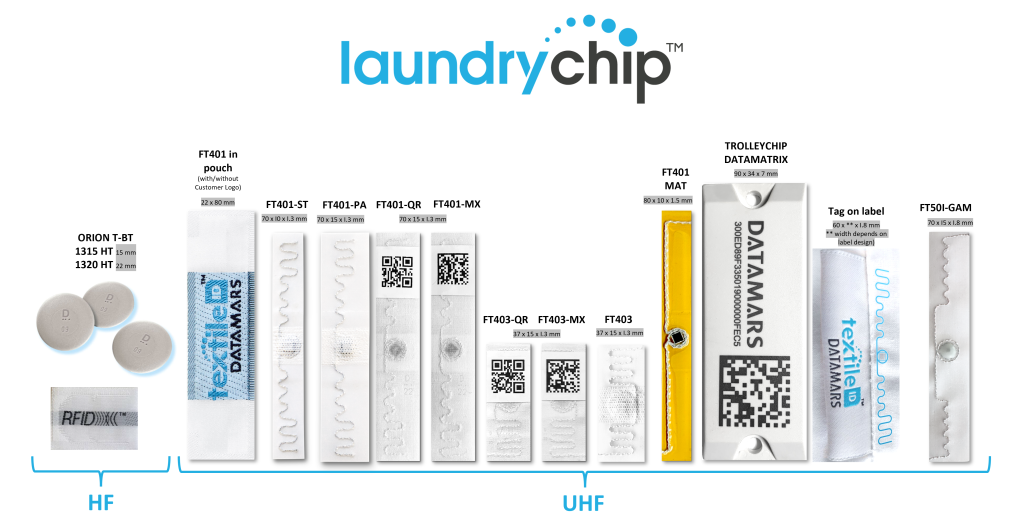
FT401, 70 x 10 mm
The standard UHF LaundryChip™ format for flat linen, garments and general textile laundry applications. The FT401 is OEKO-TEX certified and MR Conditional certified for MRI environments. Available also with QR code or Datamatrix integrated.
FT403, 37 x 15 mm
The compact UHF LaundryChip™ format for smaller textile items such as napkins, facecloths and small towels. FT403 delivers the same reading performance as FT401 and is OEKO-TEX certified. Available also with QR code or Datamatrix integrated.
FT401 MAT
A vinyl-based UHF transponder for floor mats, entrance mats and mops, designed to be vulcanized directly into the textile or rubber structure during production. See 401-MAT.
LaundryChip™ Tag-on-label
The LaundryChip™ tag-on-label is the all-in-one automated solution for seamless RFID integration in textile manufacturing. LaundryChips™ are embedded directly into textile labels during textile production: no added steps, no added equipment.
Gamma Resistant LaundryChip™
Designed for medical cleanrooms and sterile environments, the Gamma Resistant LaundryChip™ FT501-GAM withstands over 100 gamma sterilization cycles while maintaining industry-leading UHF performance and reliable reading accuracy.
TrolleyChip
A rugged on-metal UHF transponder for laundry cart tracking, with durable white ABS housing and laser-engraved Datamatrix code.
UHF reading infrastructure
UHF RFID reading systems for textile services
UHF RFID reading systems capture textile identity automatically at key points in the laundry process. Depending on the workflow, laundries can use pass-through portals, tunnel systems, cabinet systems, handheld devices or UHF “read on the fly” for garments sorting systems, to read tagged textiles in bulk, at speed and without line-of-sight. The right reader setup depends on where data must be captured: intake, sorting, finishing, storage, dispatch, delivery or inventory reconciliation. Datamars offers also combo systems UHF-HF-LF for operations transitioning from LF or HF to UHF. They support phased technology migration without immediate full infrastructure replacement.
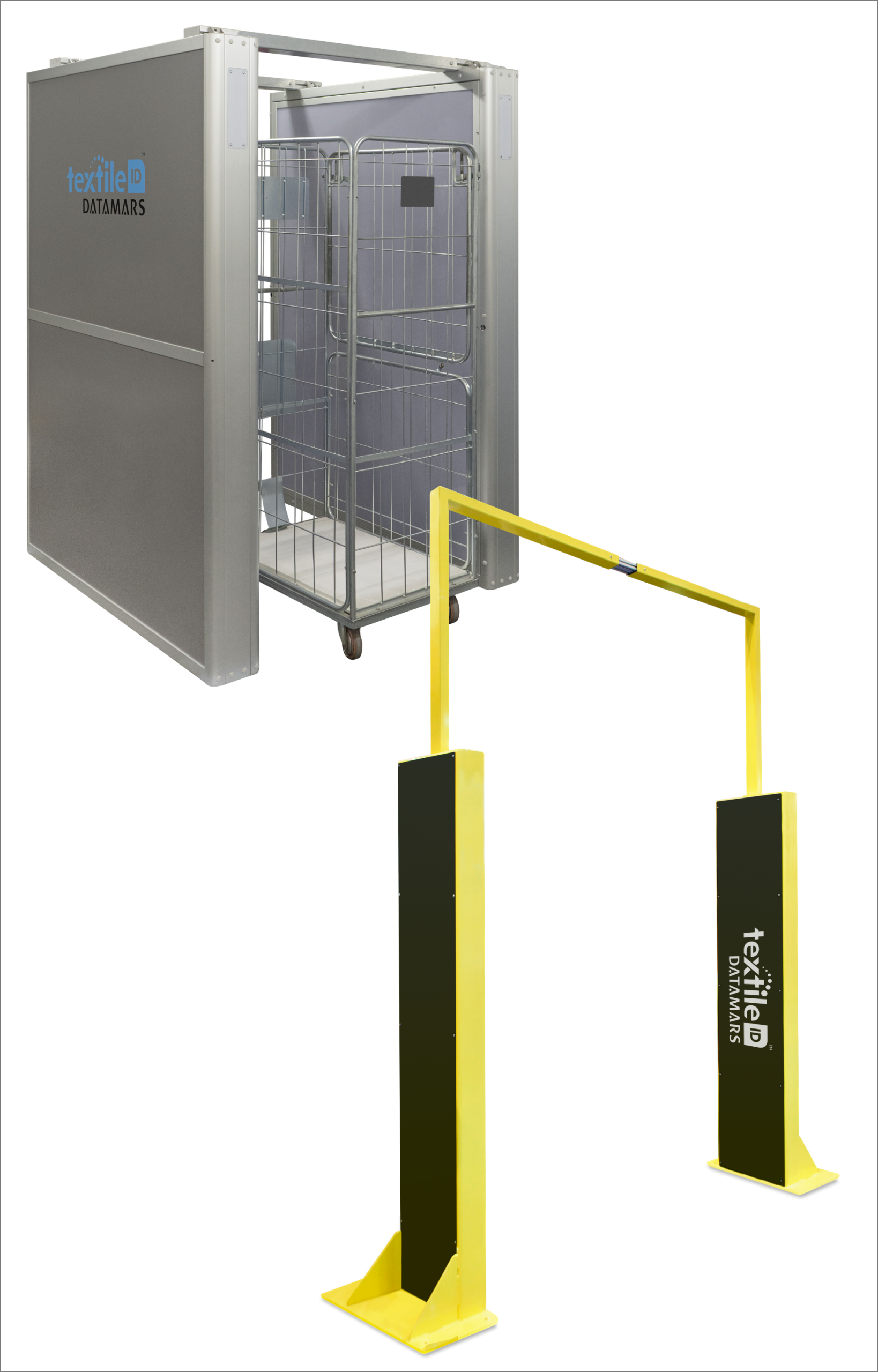
Pass-through portals. Installed at process entry and exit points such as laundry intake, dispatch gates and linen room entrances. They read all items passing through automatically and in bulk. Fast and reliable, they are the perfect solution for bulk scanning in movement on the soil side (UHF Portal 201) and on the clean side (UHF Portal Plus).
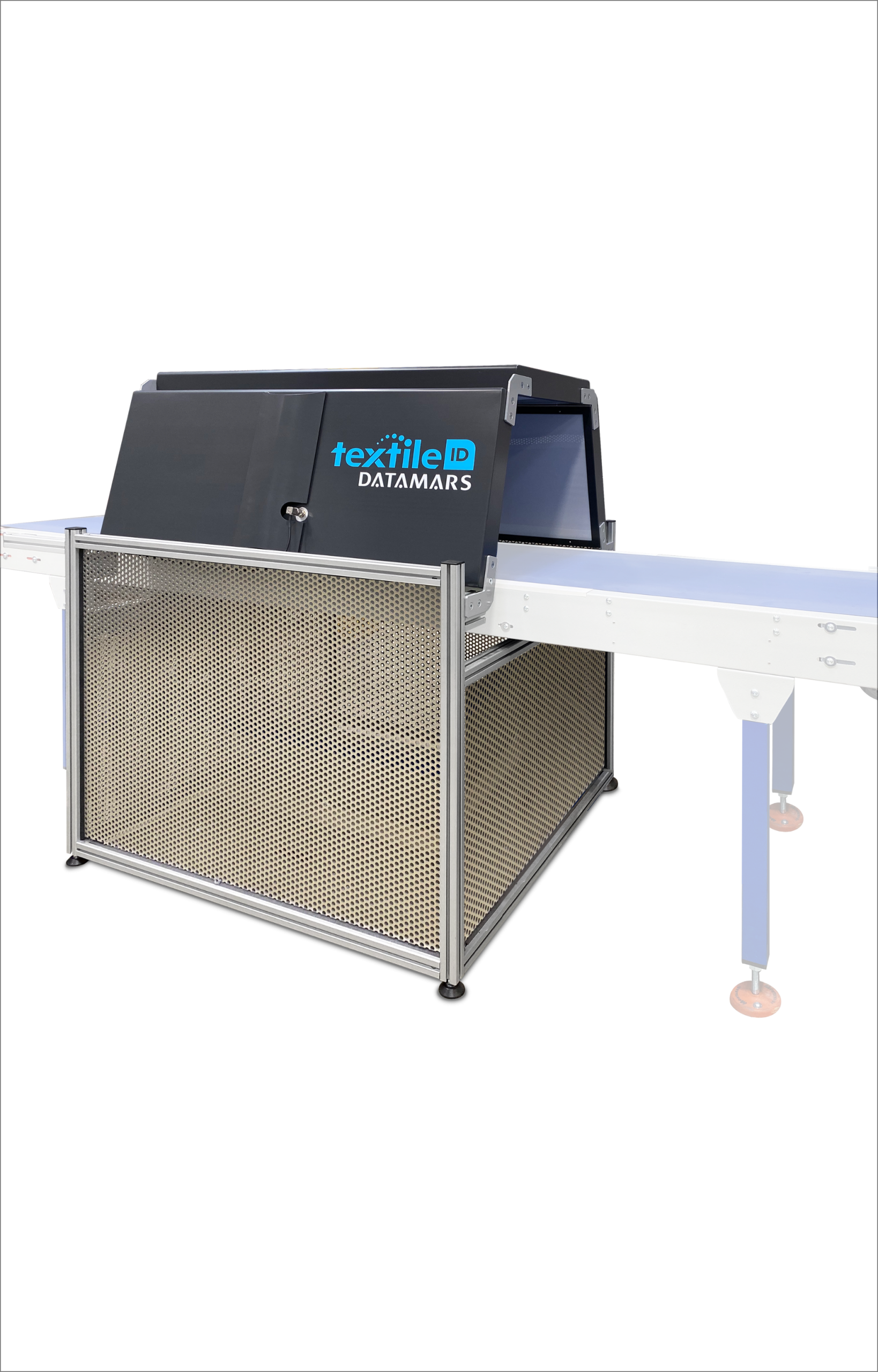
Tunnel systems. Perfect to read stack of textiles after folding, they can be installed on virtually any conveyor belt with no need to modify existing automation or belt set-up. State-of-the-art electrical performance allows the tunnel to read on-the-fly without stopping the belt. See the UHF Tunnel 201.
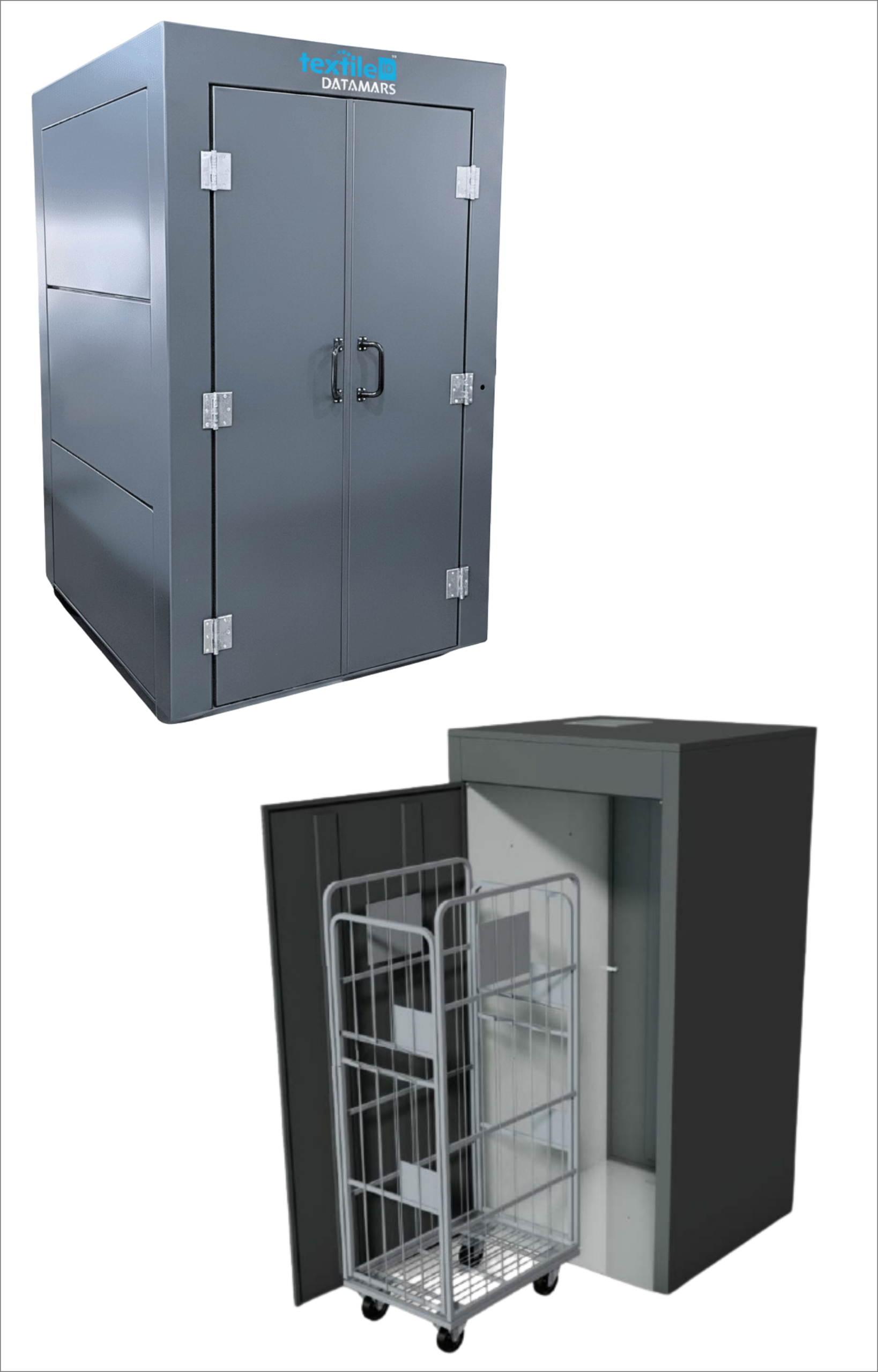
Cabinet systems. Enclosed reading chambers used for bulk counting at transfer points, storage areas and verification points. Cabinet systems can read up to 1,000 items in 3 seconds and are used for inventory checks, client-level stock counts and pre-dispatch verification. Available either in manual version for light industrial environment (UHF LITECAB 101) or fully automated for heavy duty operations (UHF CAB 301).
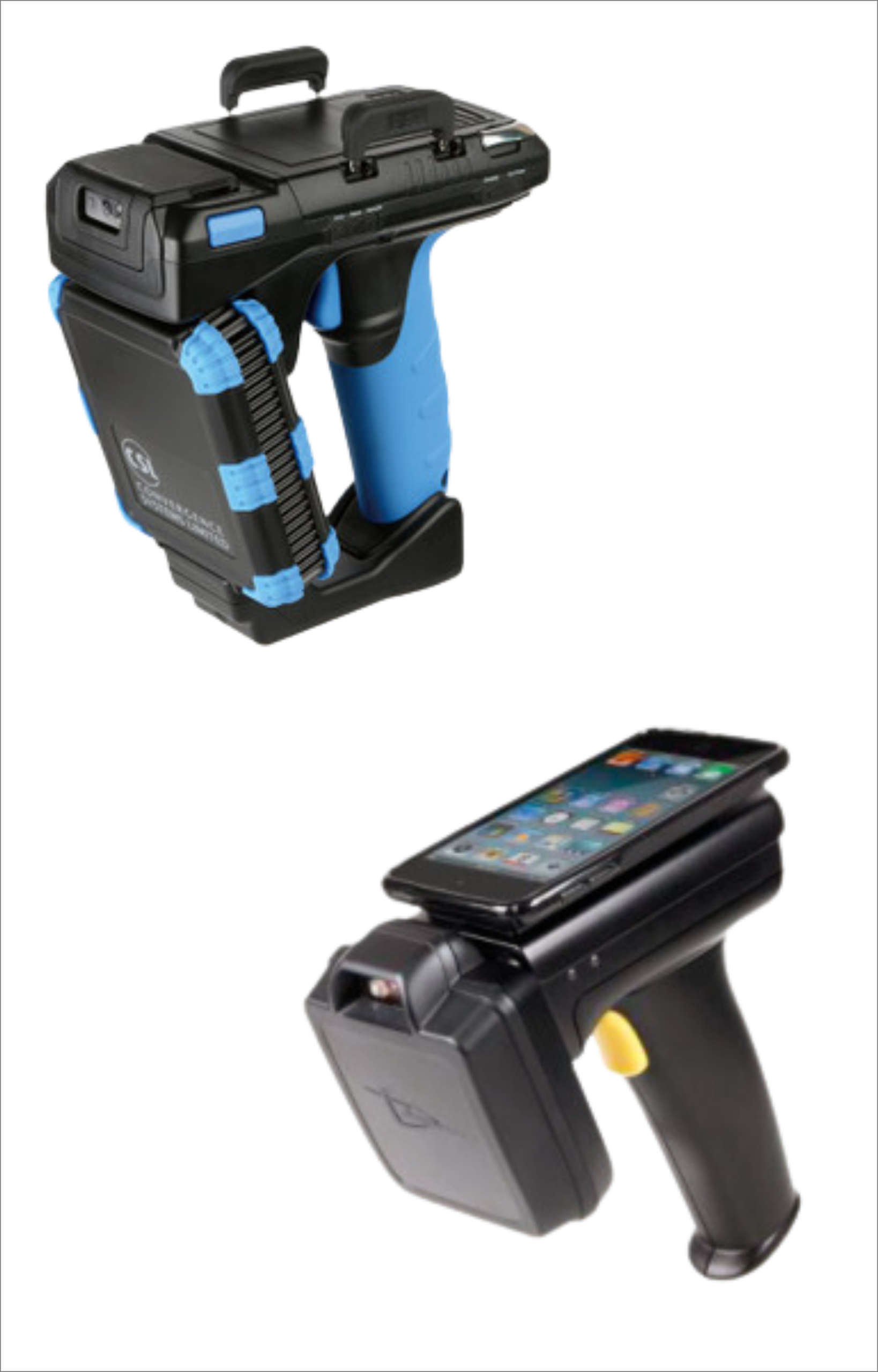
Handheld devices. Mobile readers used for inventory counts, spot checks, delivery verification and reconciliation tasks at the client site, in storage areas or on the floor. See how the UHF Handheld Reader works.
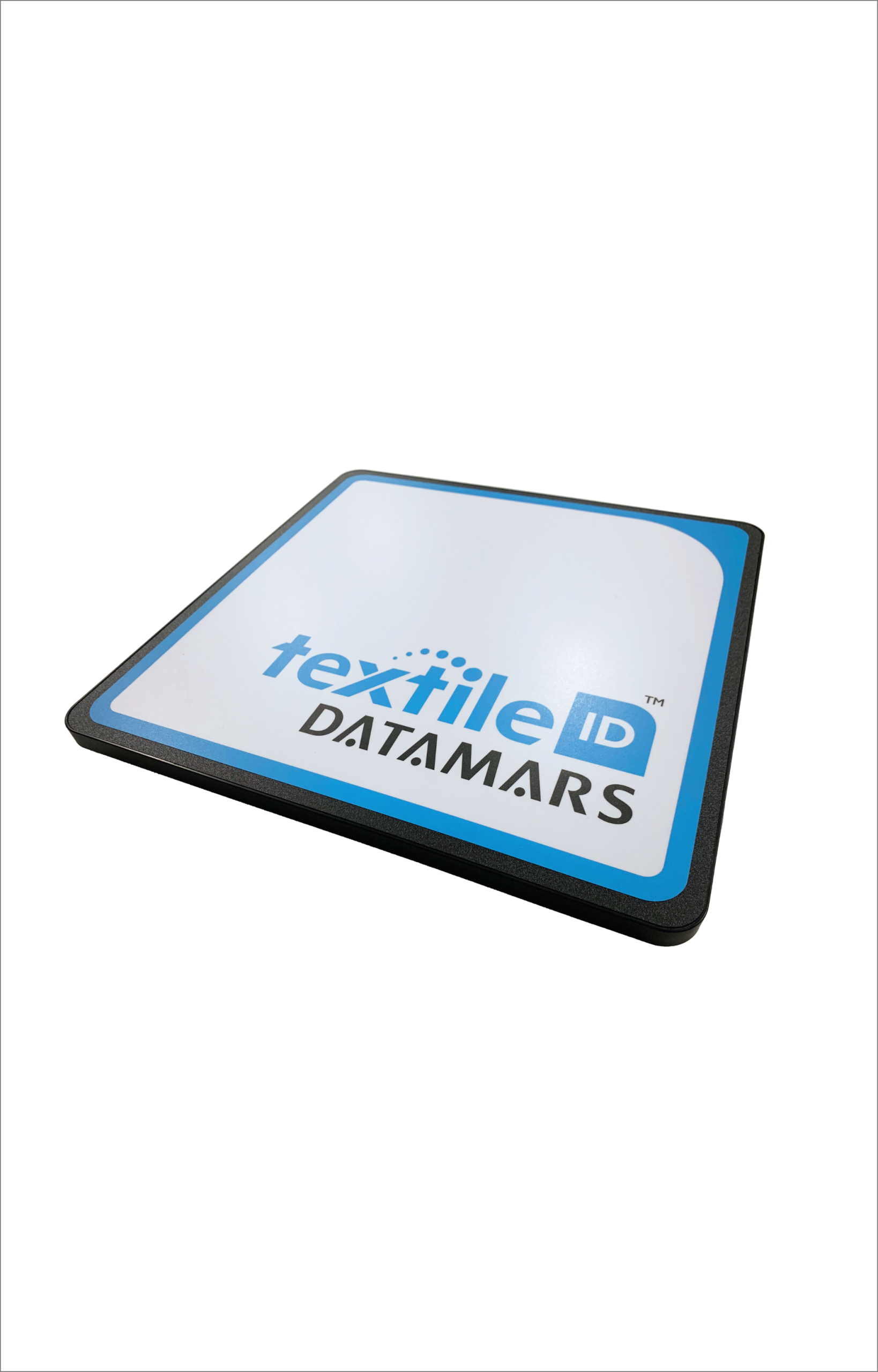
Table tops. No-brainer solution for any table-top need, they are available in a large number of configurations and can be customized to fit any customer situation.
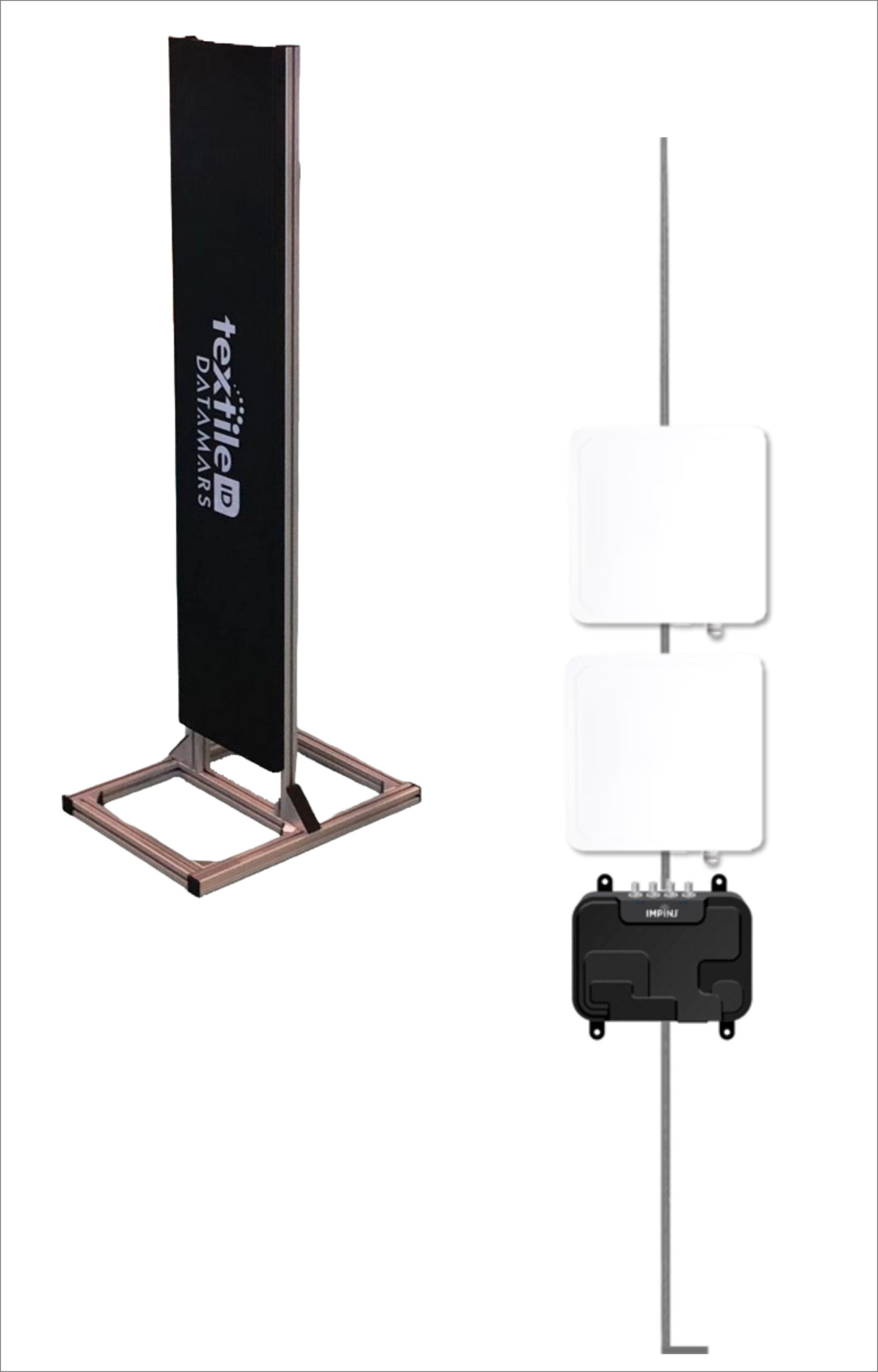
UHF hanging conveyor and UHF “Read on the Fly” for garment sorting systems. Designed to read hanging garments, they are compatible with major brands of workwear conveyors. Multiple options allow to adapt the reading system to the conveyor speed, spacing between garments or conveyor arrangement. Discover more.
From RFID reads to usable data
Software integration: Storm and Cloudburst
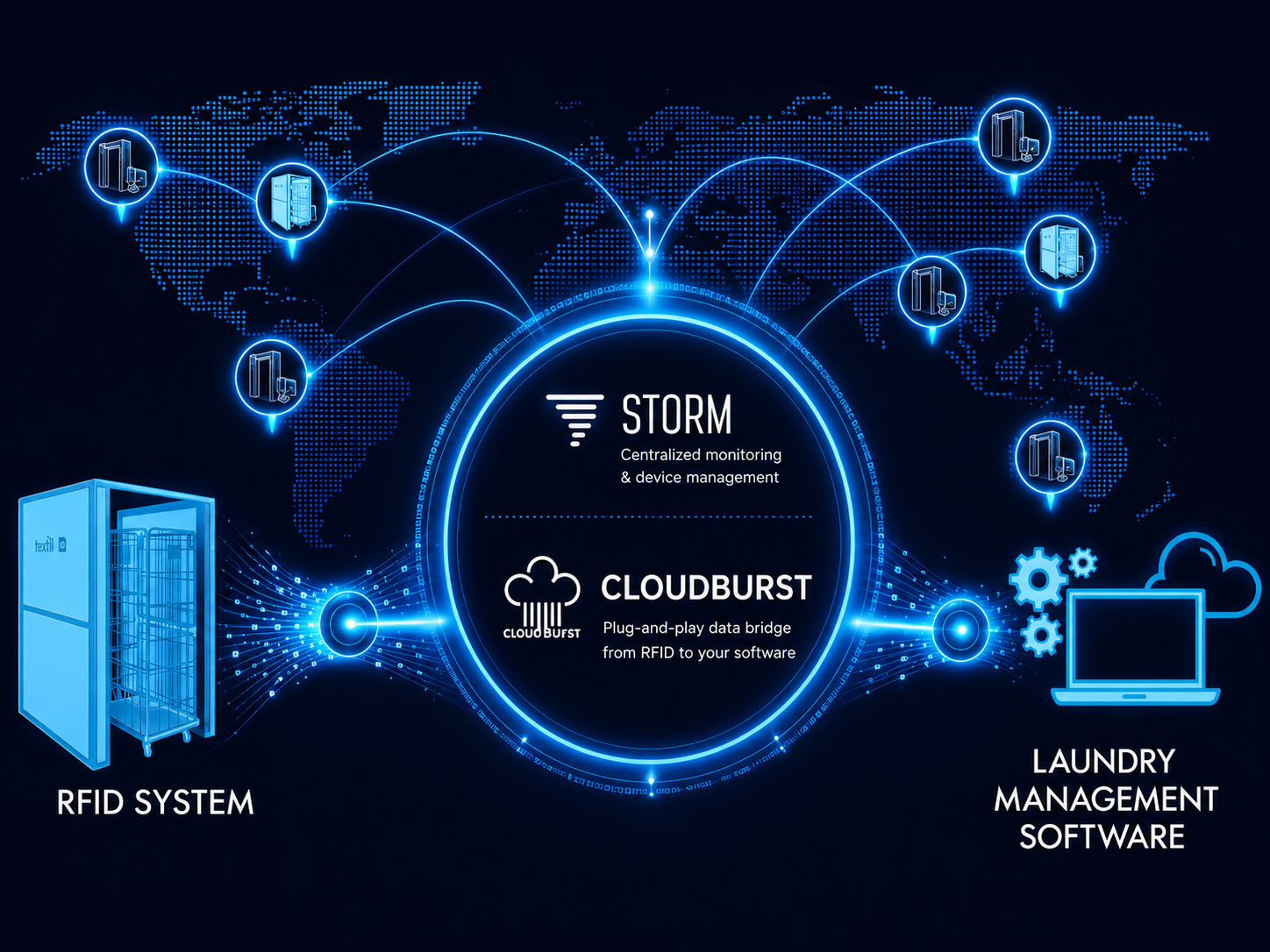
Reading hardware captures UHF RFID data. Storm and Cloudburst make sure that data is reliable, connected and usable.
- Storm monitors and manages all RFID devices across the installation. It provides real-time device health monitoring, anomaly alerts, remote configuration management and centralized visibility over the full reading network. For large or multi-site deployments, Storm helps keep the UHF RFID infrastructure reliable and the data layer continuous.
- Cloudburst is the plug-and-play UHF RFID data integration layer. It collects read data from Datamars reading points and delivers it ready-to-use to third-party laundry management, textile tracking, ERP, billing or reporting software. This enables real-time RFID data integration without requiring custom development on the laundry side.
For the full system architecture, see RFID laundry management system.
USE CASES
Applications of UHF RFID in textile services
UHF RFID textile services are used wherever reusable textiles must be identified, counted and tracked at scale. The same UHF technology supports different textile workflows: industrial laundry, textile rental, hospitality linen, healthcare textiles, flat linen operations and workwear programs. In each sector, UHF RFID enables fast bulk reading, real-time inventory visibility, wash-count tracking and item-level traceability, while the tag format, reader setup and software integration are configured around the specific process.
- Industrial laundry and textile rental. UHF RFID supports bulk intake and dispatch verification, client-level inventory, wash-count tracking and billing data. See RFID laundry tracking and RFID textile rental tracking.
- Hospitality. UHF RFID supports hotel linen tracking across the hotel-laundry interface, with focus on linen loss reduction and inventory control. See hotel linen tracking.
- Healthcare. UHF RFID supports patient linen, staff garments and surgical textiles, including MR Conditional and gamma-resistant tag options for specialized clinical environments. See healthcare linen and garment tracking.
- Flat linen operations. UHF RFID supports tunnel and portal integration for high-throughput sheet, towel, table linen and napkin processing. See RFID flat linen tracking.
- Workwear and uniforms. UHF RFID supports garment assignment per employee, automated dispenser integration, wash-count tracking and PPE compliance. See workwear and uniform tracking.
For the full portfolio by sector and textile type, see RFID solutions specialized for any laundry sector and textile. For the full textile lifecycle perspective, see RFID textile tracking.
QUESTIONS & ANSWERS
Frequently asked questions
UHF RFID for textile services is a radio frequency identification technology that operates in the 860–960 MHz range and allows textile items to be identified automatically, in bulk, at long range and without line-of-sight. It is used in industrial laundry because textiles move in carts, bags, stacks and conveyor lines, not one by one. UHF RFID provides the read range and bulk reading speed needed for high-throughput laundry operations, including up to 1,000 items read in 3 seconds with the right Datamars reading system and LaundryChips™ configuration.
UHF RFID is better than HF or LF for laundry because industrial laundry requires bulk reading at production speed. LF RFID typically reads one item at a time at very short range, while HF RFID reads smaller groups at close range. In contrast, UHF RFID can read hundreds of textile items simultaneously, at longer range and without line-of-sight. This makes it suitable for reading carts, bags, folded textiles and conveyor loads without separating items manually. For high-volume industrial laundry and textile services, UHF is the practical standard for new deployments.
A UHF RFID laundry tag is a washable RFID transponder permanently embedded in a textile item to enable automatic identification throughout the laundry process. The Datamars LaundryChip™ is engineered specifically for industrial laundry conditions, including high-temperature washing, chemical detergents, water extraction, tumble drying, ironing and mechanical pressing. Each LaundryChip™ carries a unique digital identity that can be read by UHF RFID readers and connected to inventory, wash-count, billing and lifecycle data in the software system. For the complete tag range, see RFID laundry tags.
The main benefits of UHF RFID in textile services are high-speed bulk reading, long read range, no line-of-sight identification, automated counting, real-time inventory visibility and accurate wash-count tracking per item. UHF RFID allows laundries to read large quantities of textiles simultaneously, up to 1,000 items in 3 seconds with suitable Datamars reading systems, without manually handling each item. This supports faster intake, dispatch verification, client-level reconciliation, billing accuracy, loss reduction and scalable textile tracking across single-site and multi-site laundry operations.
A UHF RFID system for textile rental is the complete infrastructure used to track rental textiles per item, client, contract, delivery, wash cycle and lifecycle status. It combines UHF LaundryChips™, RFID reading systems and software integration so textile rental companies can manage large inventories across multiple clients and locations. UHF RFID supports automated intake and dispatch verification, item-level billing, loss attribution, stock visibility and replacement planning. Datamars provides the UHF RFID hardware layer and Cloudburst integration for rental operations worldwide. See RFID textile rental tracking.
UHF RFID can read folded textiles, fabric layers and packed carts without requiring each item to be separated or individually presented to a reader. In wet or high-moisture laundry conditions, performance depends on the complete system design, including tag placement, antenna configuration, reader power, textile type and process environment. Datamars supports system assessment and reader configuration to optimize UHF RFID performance in real laundry conditions. This is why testing the actual textile flow is important before deployment, especially in processes involving wet laundry, dense batches, metal structures or high-speed conveyor movement.
Bulk reading with UHF RFID in laundry means reading many tagged textile items simultaneously, without separating them and without manual scanning. This is typically done with pass-through portals, tunnel systems or cabinet readers. Datamars cabinet systems can read up to 1,000 items in 3 seconds, while tunnel systems integrated into sorting or finishing lines can read items at production speed without interrupting the workflow. Bulk reading is the key reason UHF RFID is used in high-volume industrial laundry, where manual counting would be too slow, costly and inaccurate.
Existing LF or HF RFID infrastructure can be integrated with a new UHF system through Datamars combo systems UHF-HF-LF. These systems are designed for laundries that still operate older LF or HF technologies but want to transition progressively to UHF RFID. Existing textiles or processes can continue to be read while new items enter service with UHF LaundryChips™. This phased migration approach helps laundries move toward modern bulk reading performance without replacing all infrastructure at once or disrupting existing operations.
UHF RFID is compatible with existing laundry management software when the RFID data is connected through the right integration layer. Datamars Cloudburst collects UHF RFID read data from Datamars reading systems and delivers it in standardized formats to third-party laundry management software, ERP systems, billing platforms or reporting tools. This allows laundries to add real-time RFID data to the software environment they already use, without replacing their operational platform. For the full integration architecture, see RFID laundry management system.
The read range of UHF RFID in a laundry environment is typically between 1 and 10 metres, depending on reader power, antenna configuration, tag placement, textile type and environmental factors such as metal structures, water, item density and reading point design. In industrial laundry, the practical read range is optimized for each process point, such as portals, tunnels, cabinets, conveyors or handheld checks. Datamars supports site assessment, reader placement and system configuration to achieve reliable reading performance in real textile service environments.
GET STARTED
Ready to evaluate UHF RFID for your textile operation?
Tell us about your operation: current technology infrastructure, textile types, volumes and throughput requirements. We will recommend the right uhf rfid textile configuration and help you assess the transition path from your current setup.
 Datamars | Textile ID